Salt Typhoon APT Campaign Targets US Telecommunications Infrastructure
Chinese state-sponsored threat actor Salt Typhoon (aka Bronze Silhouette) conducts persistent intrusion campaign against US telecommunications providers. The group employs sophisticated living-off-the-land techniques and custom malware to maintain long-term access to critical infrastructure.
The Salt Typhoon advanced persistent threat (APT) group, assessed to be operating on behalf of Chinese state interests, has been identified conducting a sophisticated cyber espionage campaign targeting United States telecommunications providers. The campaign, which began in mid-2021, focuses on establishing persistent access to telecom infrastructure and exfiltrating sensitive network configuration data and subscriber information.
The threat actor demonstrates sophisticated tradecraft, extensively using living-off-the-land techniques and legitimate administrative tools to evade detection. Technical analysis reveals the deployment of previously undocumented malware families including SaltWater and TyphoonBox, designed specifically for maintaining long-term access to compromised telecom environments. The campaign represents a significant threat to US critical infrastructure and national security interests.
Key Findings
The Salt Typhoon advanced persistent threat (APT) group, assessed to be operating on behalf of Chinese state interests, has been identified conducting a sophisticated cyber espionage campaign targeting United States telecommunications providers
The campaign, which began in mid-2021, focuses on establishing persistent access to telecom infrastructure and exfiltrating sensitive network configuration data and subscriber information
The threat actor demonstrates sophisticated tradecraft, extensively using living-off-the-land techniques and legitimate administrative tools to evade detection
Technical analysis reveals the deployment of previously undocumented malware families including SaltWater and TyphoonBox, designed specifically for maintaining long-term access to compromised telecom environments
Overview
Salt Typhoon (also tracked as Bronze Silhouette and UNC3561) is a sophisticated Chinese state-sponsored APT group that has been actively targeting US telecommunications providers since mid-2021. The campaign focuses on establishing persistent access to critical infrastructure and exfiltrating sensitive data related to network operations and subscriber information.
Technical Analysis
Initial Access & Persistence
The threat actor primarily gains initial access through:
Exploitation of exposed management interfaces
Password spraying attacks against VPN infrastructure
Strategic web compromises targeting telecom employees
Once inside target networks, Salt Typhoon deploys multiple persistence mechanisms including:
Modified legitimate scheduled tasks
Backdoored system utilities
Custom implants in network monitoring software
Malware Toolset
Two previously undocumented malware families have been identified:
SaltWater: A modular remote access trojan with capabilities for credential theft, network enumeration, and data exfiltration
TyphoonBox: A sophisticated backdoor that masquerades as legitimate networking utilities
Impact Assessment
The campaign poses several critical risks:
Potential access to subscriber data and call metadata
Capability to monitor or disrupt network operations
Access to sensitive network configuration and architecture details
Potential for future sabotage operations
Recommendations
Implement robust network segmentation for management interfaces
Deploy multi-factor authentication across all remote access services
Increase monitoring of scheduled tasks and system utility modifications
Regular audit of privileged accounts and access patterns
Deploy EDR solutions with custom detection rules for identified TTPs
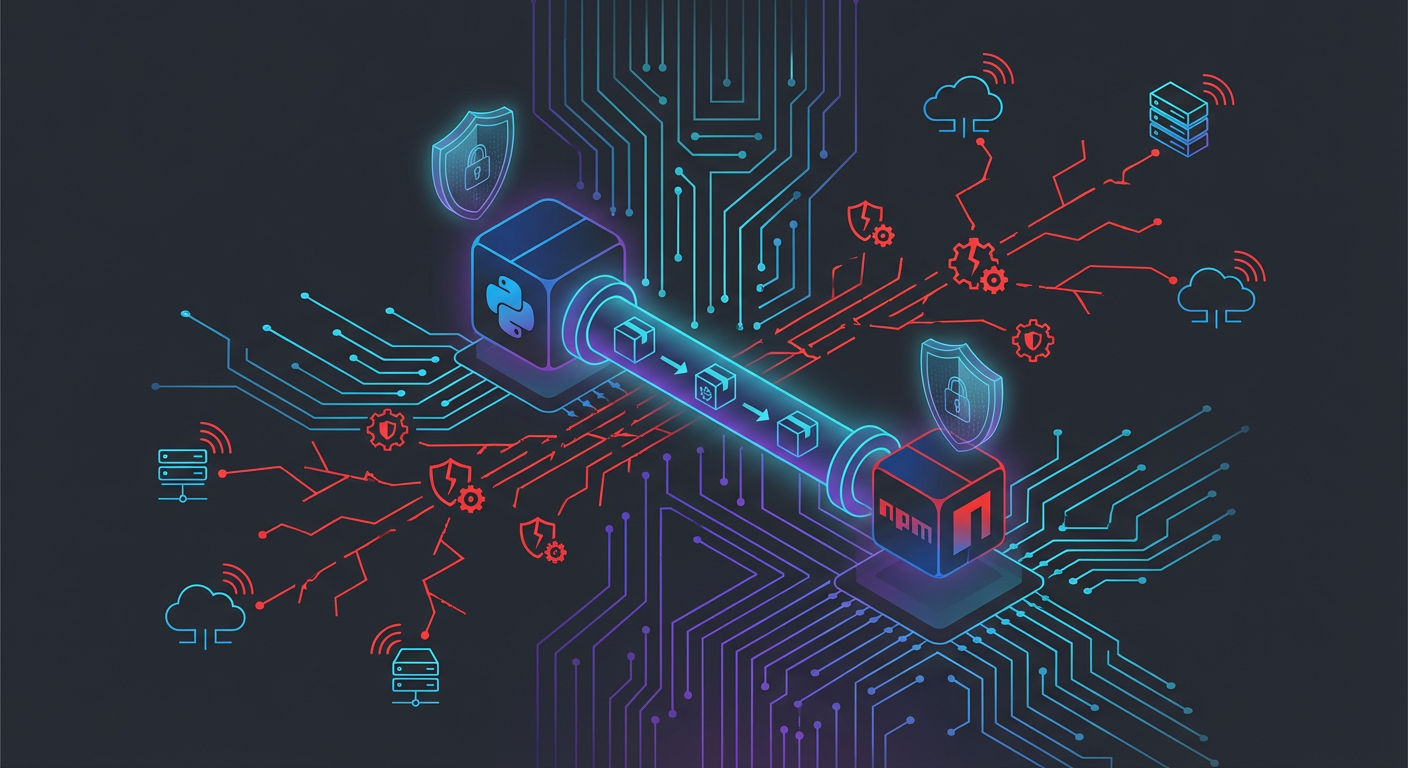
Multiple malicious packages discovered in PyPI and npm repositories executing credential theft and crypto mining payloads. Supply chain attacks leverage typosquatting and dependency confusion techniques to compromise development environments.
A critical authentication bypass vulnerability in ConnectWise ScreenConnect (CVE-2024-1709) is being actively exploited in the wild. The flaw allows attackers to gain unauthorized administrative access and execute remote code on affected systems.
Critical authentication bypass and command injection vulnerabilities in Ivanti Connect Secure VPN are being actively exploited in the wild. Threat actors are deploying web shells and maintaining persistence in compromised environments.
Large-scale ransomware campaign exploiting VMware ESXi vulnerabilities to encrypt virtual machines and disrupt business operations. Attackers leverage CVE-2021-21974 to compromise unpatched systems globally.
🔐
Stay Briefed
Get daily cybersecurity threat intelligence delivered to your inbox. No spam, just actionable intel.